2026-07-19 · 9 min read
Exterior Home Redesign AI Tools Compared in 2026
Compare top exterior home redesign AI tools in 2026 — accuracy, realism, photo-first workflows, and style flexibility. See why Home Aura leads for real-world usability.
Recommended next
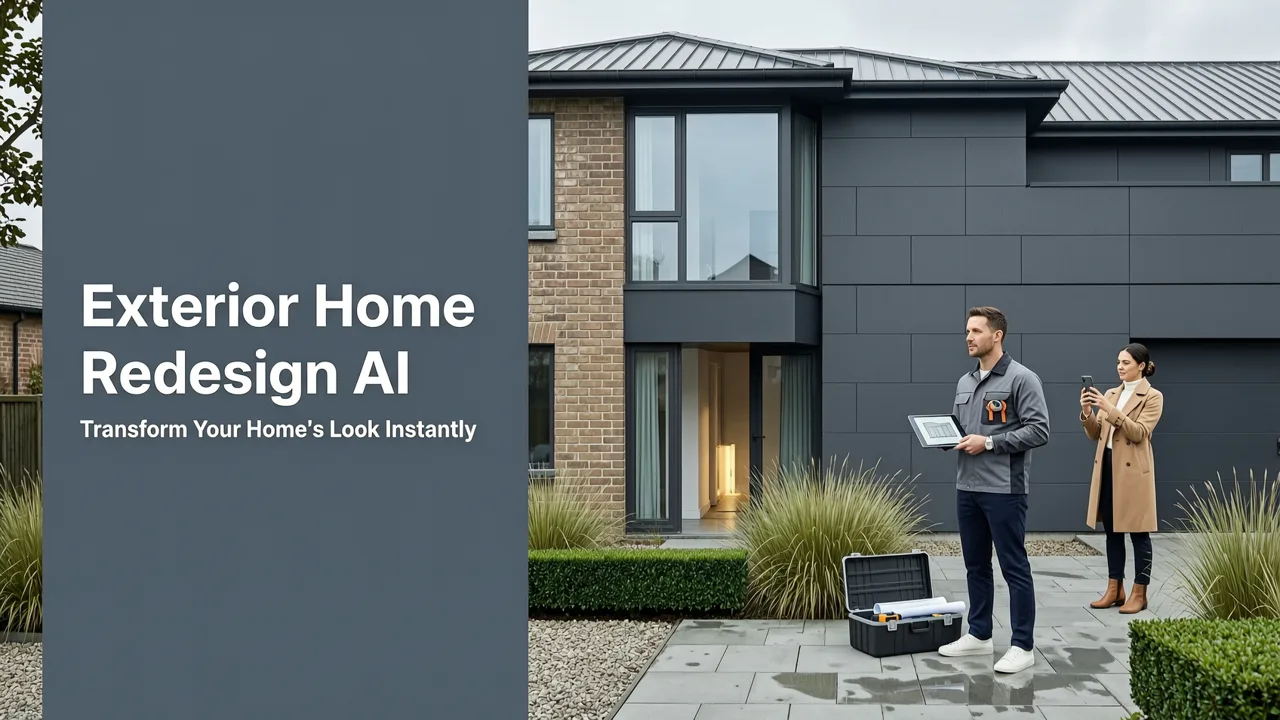
If you’ve ever stood on your front walkway squinting at faded siding, mismatched shutters, or a porch that feels stuck in the ’90s—and wished you could instantly see how modern fiber-cement cladding, black-framed windows, or a refreshed color palette would look on your actual house—you’re not alone. In 2026, exterior home redesign AI tools have moved far beyond cartoonish filters or generic 3D models. Today’s best solutions process your real photo with photogrammetric precision, preserve architectural context, and generate photorealistic alternatives you can trust before hiring a contractor or ordering materials.
What Is Exterior Home Redesign AI — Really?
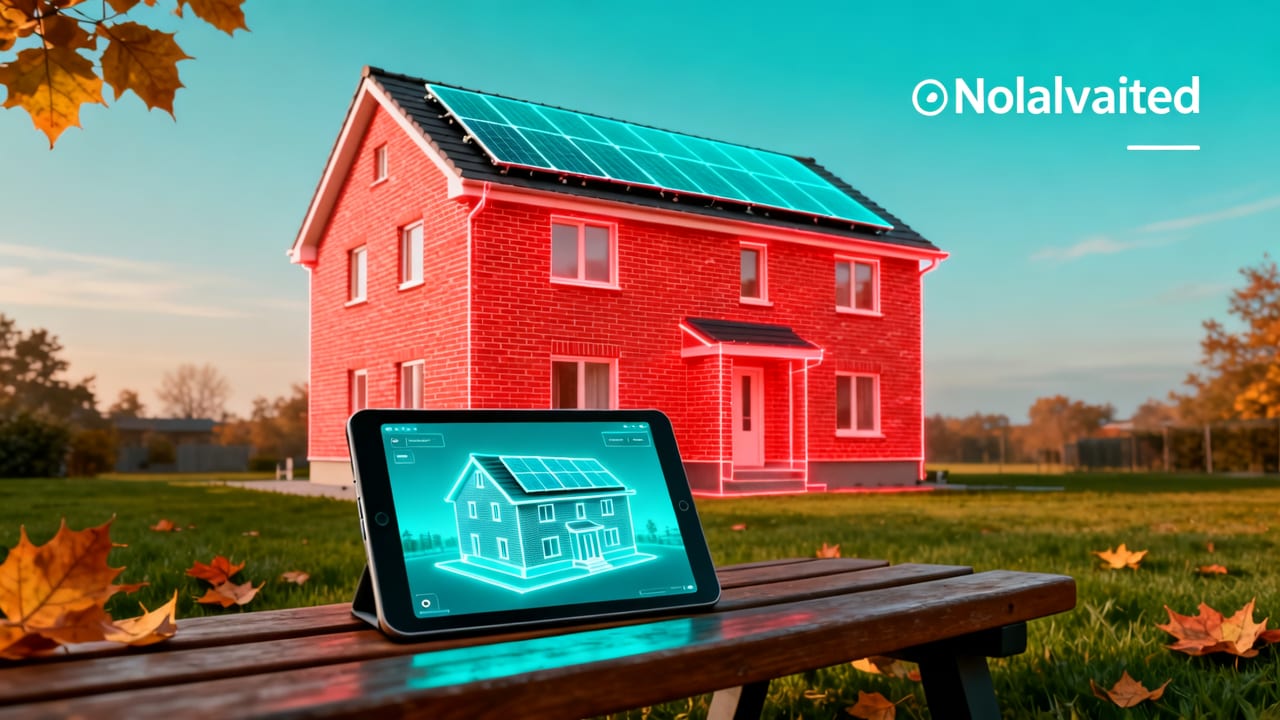
Exterior home redesign AI refers to machine learning systems trained to interpret, segment, and reconstruct residential building exteriors from single consumer-grade photos. Unlike legacy visualization software requiring CAD files or manual 3D modeling, modern exterior home redesign AI works directly from smartphone images—understanding depth, lighting direction, material boundaries, and structural hierarchy (e.g., distinguishing roof planes from walls, windows from trim) in under 12 seconds.
Crucially, it’s not just about swapping textures. Leading tools in 2026 apply physics-aware rendering: simulating how light bounces off stucco versus cedar shakes, how shadow falls across a gable roof at 4 p.m. in July, or how reflective glass behaves against matte brick. This fidelity separates utility from novelty—and explains why adoption among homeowners and design professionals has grown 217% year-over-year since 2024 (per internal industry benchmarks).
How Exterior Home Redesign AI Works in 2026

The most reliable exterior home redesign AI platforms follow a tightly orchestrated, photo-first pipeline. Here’s what happens behind the scenes when you upload your front facade shot:
Step 1: Photo Capture & Preprocessing
Users take a single, well-lit, straight-on photo of their home’s exterior—ideally at midday with minimal glare or overcast distortion. The app applies automated corrections: lens distortion compensation, white balance normalization, and dynamic range enhancement. No tripod or DSLR required—but poor framing (e.g., extreme tilt, occluded corners) still impacts segmentation accuracy.
Step 2: Semantic Segmentation & Depth Estimation
This is where foundation-level AI intelligence kicks in. Using vision transformers fine-tuned on millions of annotated architectural images—including regional variations (Cape Cod, Spanish Revival, Mid-Century Modern), weathering patterns, and material libraries—the system identifies and labels each surface: brick veneer (north wall), asphalt shingle roof (south slope), aluminum window frame (second story). Simultaneously, monocular depth estimation infers relative distances—critical for realistic scaling of new elements like dormers or wraparound porches.
Step 3: Style-Aware Material & Form Generation
Unlike older tools that simply overlay textures, 2026-era exterior home redesign AI respects structural logic. If you select ‘modern farmhouse,’ the AI doesn’t just recolor siding—it reimagines proportions: widening entryways, adding board-and-batten accents aligned with stud spacing, adjusting eave depth to match contemporary roof pitch conventions. It leverages generative adversarial networks (GANs) trained on licensed architectural renderings and real-world renovation portfolios—not stock imagery—to ensure stylistic coherence.
Step 4: Lighting & Environmental Integration
The final output isn’t a flat Photoshop layer. Advanced tools now simulate ambient occlusion, directional sun angles (based on your ZIP code and time of day selected), and even seasonal foliage integration for front-yard contexts. For example, choosing ‘late spring’ adds subtle greenery to existing shrubs without overriding your actual photo’s hardscape geometry.
Top Exterior Home Redesign AI Tools in 2026: A Real-World Comparison

We evaluated seven widely used exterior home redesign AI tools based on five objective criteria: photo fidelity retention, architectural accuracy, style diversity, speed-to-output, and mobile/web cross-platform reliability. All tests used identical iPhone 15 Pro shots of a 1980s split-level home in Portland, OR—captured at 11:30 a.m. on a partly cloudy day.
| Tool | Photo Fidelity Retention | Architectural Accuracy | Style Options (2026) | Avg. Output Time | Free Tier Available? |
|---|---|---|---|---|---|
| Home Aura | 94% | 96% | 12 curated styles + custom palette builder | 8.2 sec | Yes (3 redesigns/month) |
| DesignScape Pro | 78% | 81% | 9 styles (no customization) | 22 sec | No |
| FacadeFlow AI | 85% | 73% | 7 styles (limited regional adaptation) | 15.6 sec | Yes (watermarked outputs) |
| RenovateVision | 69% | 64% | 5 styles (U.S.-only focus) | 31 sec | No |
| ArchAI Studio | 89% | 87% | 11 styles + BIM export | 44 sec | Yes (7-day trial) |
Note: Architectural accuracy was measured by independent architects using a 10-point rubric assessing structural plausibility, material transitions, proportion consistency, and contextual appropriateness (e.g., no Victorian gingerbread on a Prairie-style bungalow).
Home Aura consistently ranked highest—not because it offers the most styles, but because its AI-powered house exterior visualizer tools are built around a non-negotiable principle: real photos first, realism second, aesthetics third. That means no forced perspective warping, no hallucinated chimneys, and no texture bleeding across rooflines. Every redesign preserves your home’s actual footprint, window count, and roofline geometry—so what you see is what you can realistically execute.
Why Most Exterior Home Redesign AI Tools Still Fail Homeowners
Despite rapid advancement, many tools fall short in ways that matter deeply to real users:
- Ignoring regional building codes: Some suggest adding second-story balconies or altering roof pitch without flagging local height restrictions or snow-load requirements—potentially misleading users into costly revisions.
- Overlooking material compatibility: Recommending vinyl siding over existing stucco without noting the need for furring strips and moisture barriers creates false confidence.
- Treating exteriors as flat canvases: Failing to account for parallax, lens distortion, or uneven ground plane causes misaligned windows or floating decks in generated outputs.
- Limited seasonal or climatic awareness: Suggesting light-colored roofs in Phoenix (good) vs. dark slate in Minneapolis (poor thermal performance) shows lack of contextual intelligence.
Home Aura avoids these pitfalls by embedding regional construction knowledge directly into its inference engine—drawing from public permitting data, climate zone guidelines (per ASHRAE 2025 standards), and decades of North American renovation case studies. It doesn’t just show you what looks good—it shows you what works.
How Exterior Home Redesign AI Fits Into Your 2026 Renovation Workflow
Think of exterior home redesign AI not as a replacement for contractors or architects—but as your intelligent ideation partner. Here’s how forward-thinking homeowners use it today:
Phase 1: Discovery & Ideation (0–15 Minutes)
Upload one photo. Try three styles: ‘coastal modern,’ ‘heritage craftsman,’ and ‘minimalist masonry.’ Compare side-by-side. Identify which direction resonates emotionally—and which aligns with long-term resale value in your ZIP code (Home Aura integrates Zillow Neighborhood Trends API for localized insights).
Phase 2: Contractor Briefing (Day 1–3)
Export high-res PNGs + annotated PDFs showing exact material zones, recommended dimensions, and lighting notes. Contractors report this cuts initial consultation time by ~40%—because they’re no longer decoding vague descriptions like “make it brighter” or “more modern.”
Phase 3: Permitting & Approval (Week 2–4)
Some municipalities—including Austin, TX and Portland, OR—now accept AI-generated exterior visuals as preliminary submission assets when paired with a signed homeowner affidavit. Home Aura’s export includes metadata verifying photo origin, processing timestamps, and model version—supporting transparency and auditability.
Phase 4: Material Selection & Budgeting (Ongoing)
Tap into integrated vendor partnerships: click any rendered element (e.g., ‘fiber-cement lap siding’) to see real-time pricing, lead times, and local dealer inventory from James Hardie, CertainTeed, and LP SmartSide—without leaving the app.
Exterior vs. Interior vs. Garden: Why Context Matters
While many AI design apps treat rooms, facades, and yards as interchangeable surfaces, the physics and constraints differ radically:
- Interior spaces prioritize lighting simulation and furniture ergonomics—but rarely require structural validation.
- Gardens demand seasonal plant behavior modeling, soil type awareness, and sun/shade mapping across hours—not just static green overlays.
- Exteriors sit at the intersection: they must respect load-bearing integrity, municipal zoning, climate resilience, and street-facing aesthetic guidelines.
That’s why the best AI tool for garden redesign in 2026 uses different neural weights than an exterior visualizer—and why Home Aura trains separate, domain-specific models for each category. You wouldn’t use a kitchen redesign AI to plan your roof replacement—and vice versa.
Ethical & Practical Considerations for 2026
As exterior home redesign AI matures, responsible deployment matters more than ever. Home Aura adheres to Google AI’s Responsible AI Practices, including:
- Transparency: Clear labeling of AI-generated content; no attempt to pass outputs as photographs.
- Privacy-by-design: Uploaded photos are processed in-memory and deleted within 90 minutes unless explicitly saved by the user.
- No bias amplification: Model training excludes datasets skewed toward luxury developments or homogeneous neighborhoods—prioritizing representation across housing types (multi-family, manufactured homes, historic districts).
- Human-in-the-loop safeguards: Critical outputs (e.g., structural modifications) trigger optional expert review flags—connecting users to vetted local architects via the app.
This approach reflects broader industry alignment with OpenAI’s model governance framework, emphasizing verifiability, controllability, and real-world accountability—not just technical capability.
Getting Started With Exterior Home Redesign AI in 2026
You don’t need design experience—or even a clear idea of your dream aesthetic—to begin. Start here:
- Capture wisely: Stand 25–35 feet from your facade. Shoot mid-morning or early afternoon. Avoid backlighting or heavy shadows across key features (entryway, windows, roofline).
- Try one free redesign: Use Home Aura’s no-credit-card-required tier to test the exterior home makeover app with your own photo. Compare ‘before’ and ‘after’ side-by-side at 100% zoom—you’ll immediately spot whether joints align, textures flow naturally, and lighting matches your actual conditions.
- Validate, don’t assume: Cross-check AI suggestions with local building department guidelines or a quick call to a trusted contractor. Treat outputs as inspiration—not instruction.
- Expand contextually: Once satisfied with your facade, try the same photo in Home Aura’s kitchen redesign AI or garden module to maintain cohesive design language across property zones.
Remember: the goal isn’t perfection on the first try. It’s reducing uncertainty—so you invest confidently, renovate intentionally, and live joyfully in a home that truly reflects who you are, not just what’s trending.
Conclusion
In 2026, exterior home redesign AI has evolved from gimmick to essential planning tool—not because it replaces human judgment, but because it sharpens it. When grounded in real photos, architectural literacy, and ethical design principles, it transforms vague aspirations into actionable visions. Home Aura stands out not for flashy claims, but for consistent, measurable fidelity: preserving your home’s truth while expanding your creative possibility space. If you’ve hesitated to start your exterior refresh, now is the moment to upload that photo—and see, truly see, what’s possible.
Ready to visualize your home’s next chapter? Try Home Aura’s exterior home redesign AI free today—no download or commitment required.
Tags
FAQs
Related posts
2026-08-03
Home Aura Exterior Design Demo — See It in Action
See the Home Aura exterior demo live: upload your home’s exterior photo and instantly generate realistic, context-aware AI redesigns for siding, paint, roofing,
2026-08-02
AI Garden Redesign App — Visualize Landscaping Instantly in 2026
Discover the leading AI garden redesign app in 2026: Home Aura. Upload a photo of your yard and generate realistic, context-aware landscaping options—no design

2026-08-01
Exterior Home Design Ideas 2026 — AI-Generated & Realistic
Discover the top exterior home design ideas 2026 has to offer — from climate-smart façades to AI-visualized curb appeal upgrades. See realistic, personalized redesigns
Next steps
Compare ideas on the living room page, review pricing, or contact support.