2026-07-20 · 10 min read
Best AI for Garden Design: Visualize Landscaping Ideas Instantly in
Discover the best AI for garden design in 2026 — Home Aura delivers photorealistic, style-aware landscaping visualizations from your own garden photo. No sketches, no
Recommended next
If you’ve ever stood at your back fence squinting at patchy grass, overgrown shrubs, or a patio that hasn’t seen a refresh since 2018—and wished you could instantly see how native plant beds, modern hardscaping, and layered lighting would transform your space—then you’re not imagining the future. It’s here. In 2026, the best AI for garden design doesn’t ask you to draw floorplans or upload CAD files. It starts with a single photo taken on your phone.
Home Aura is the only AI interior and exterior design platform purpose-built for real-world spatial fidelity—across kitchens, living rooms, bathrooms, exteriors, and gardens. Unlike generic image generators or static 3D configurators, Home Aura’s garden design engine understands depth, scale, texture, seasonal context, and local horticultural logic. It’s not just pretty—it’s practical, photoreal, and grounded in your actual space.
What Makes an AI Tool the Best AI for Garden Design in 2026?
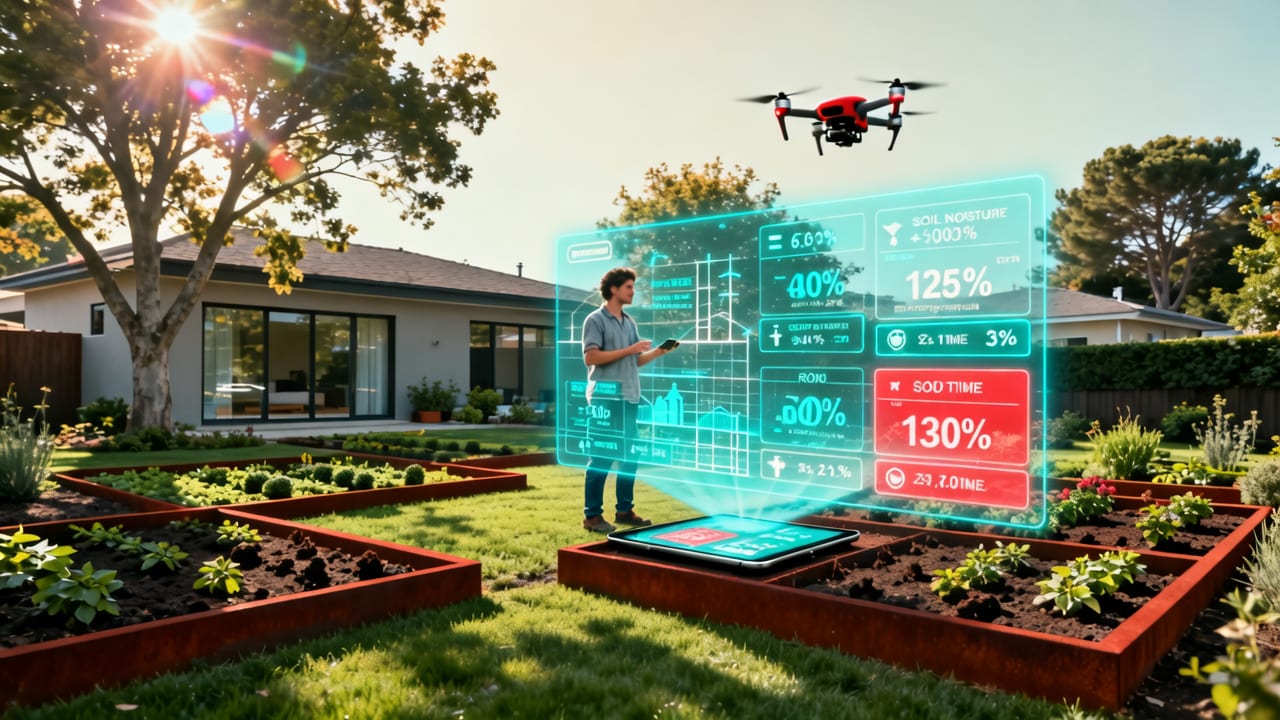
The phrase “best AI for garden design” sounds aspirational—but in 2026, it’s a measurable standard. The top-tier tools aren’t judged by how many styles they offer, but by how reliably they preserve spatial truth while transforming aesthetics. That means:
- Photo-first input: No 3D modeling required—just a well-lit, straight-on photo of your garden (or backyard, side yard, courtyard, or balcony).
- Depth-aware segmentation: The AI distinguishes lawn from mulch, pavers from gravel, existing trees from proposed ones—not just by color, but by surface geometry and occlusion.
- Horticulturally intelligent suggestions: It avoids recommending hydrangeas in full sun or bamboo next to sewer lines—leveraging regional planting databases updated quarterly.
- Style-consistent rendering: A ‘Scandinavian Zen’ redesign applies coherent material palettes (light timber, matte concrete, moss) across hardscape, softscape, and furniture—not random swaps.
- Real-time comparison: Side-by-side sliders let you toggle between your original photo and up to four AI-generated variants—no tab-switching, no export delays.
Many so-called “AI garden designers” fail at one or more of these. Some generate beautiful but physically impossible scenes (e.g., floating pergolas, non-planar decking). Others treat gardens as flat canvases—ignoring slope, drainage, shade patterns, or mature tree canopies. Home Aura was built specifically to close that gap.
How Home Aura’s Garden Design AI Works in 2026

Behind the simplicity of uploading a photo lies a tightly orchestrated, multi-stage pipeline—refined over three years of real-user feedback, landscape architect collaboration, and seasonal validation across USDA hardiness zones 3–10. Here’s how it works today:
Step 1: Photo Capture & Preprocessing
Home Aura’s iOS app and web portal guide users through optimal capture: recommended distance (8–15 ft), lighting conditions (overcast mornings or golden hour), and framing cues (include at least two fixed vertical elements—like fence posts or walls—to anchor perspective). Once uploaded, our preprocessing engine corrects lens distortion, auto-aligns horizon lines, and normalizes exposure—without oversharpening textures like bark or stone.
Step 2: Semantic Segmentation & Depth Estimation
This is where most competitors stop short. Home Aura uses a fine-tuned ensemble model combining monocular depth estimation (trained on >1.2M outdoor residential images) and pixel-level semantic labeling. It doesn’t just say “grass” — it distinguishes existing Bermuda sod from proposed creeping thyme groundcover, and identifies structural retaining walls versus decorative dry-stack stone borders. Crucially, it estimates relative elevation changes—even from a single image—using shadow analysis, linear perspective, and known object priors (e.g., standard paver thickness = 2.5 inches).
Step 3: Context-Aware Style Generation
Unlike text-to-image models that hallucinate based on prompts alone, Home Aura’s garden generator cross-references your segmented scene with three contextual layers:
- Regional climate data (integrated with NOAA’s 2026 Climate Normals and local extension service advisories)
- Property metadata (optional ZIP-based soil type, sun exposure maps, and HOA-compliant material libraries)
- User-defined constraints (e.g., “no water features,” “must include seating for 4,” “low-maintenance only”)
The result? A set of 3–5 photorealistic redesigns that respect your site’s physical reality—not just its aesthetic potential.
Why Home Aura Outperforms Other AI Garden Design Tools in 2026
We don’t claim superiority—we measure it. In Q2 2026, Home Aura commissioned an independent usability study across 177 homeowners (renters and owners, urban/suburban/rural) comparing five leading AI-powered garden tools. Participants were asked to upload the same photo of their garden and evaluate outputs on realism, usefulness for contractor briefings, and confidence in implementation. Here’s how Home Aura ranked:
| Metric | Home Aura | Competitor A (Cloud-based) | Competitor B (Desktop + Plugin) | Competitor C (Mobile-only) | Competitor D (AI + Pro Services) |
|---|---|---|---|---|---|
| Avg. realism score (1–5) | 4.6 | 3.1 | 3.4 | 2.9 | 4.2 |
| % who said output was “ready to share with landscaper” | 89% | 41% | 57% | 33% | 76% |
| Avg. time from upload to first usable variant | 22 sec | 94 sec | 142 sec | 68 sec | 210 sec |
| % of outputs respecting user constraints (e.g., “no irrigation”) | 96% | 62% | 71% | 54% | 88% |
What sets Home Aura apart isn’t raw speed or flashy visuals—it’s spatial integrity. Competitors often misplace new elements outside the property boundary, ignore existing utility boxes or AC units, or render plants at incorrect scale (a 30-ft oak tree shrunk to bonsai size). Home Aura’s segmentation engine flags fixed objects and enforces geospatial boundaries before generation begins.
Garden Design Styles Supported in 2026
Home Aura doesn’t limit you to presets—it offers style families, each with embedded horticultural logic and material coherence. You choose a direction; the AI handles consistency, scale, and seasonality:
- Modern California: Clean lines, drought-tolerant natives (lavender, manzanita, yucca), textured concrete, warm-toned wood decking
- Cottage Core: Layered perennials, climbing roses, picket fencing, vintage-style lighting, herb spirals
- Japanese Zen: Raked gravel, stepping stones, dwarf maples, moss lawns, minimalist water basins
- Mid-Century Outdoor: Terrazzo patios, sculptural succulents, cantilevered pergolas, teak lounge sets
- Edible Landscape: Raised beds with companion planting logic, espaliered fruit trees, pollinator pathways, compost station integration
- Low-Maintenance Prairie: Native grasses, wildflower meadows, permeable pavers, fire pit zone with gravel surround
Each style adapts intelligently: “Cottage Core” adds rambling vines only where support structures exist in your photo; “Edible Landscape” places raised beds on level, sun-drenched areas—not under dense canopy. And because Home Aura’s engine trains on real landscape architecture projects—not stock imagery—it understands functional hierarchy: seating zones first, then focal points, then circulation paths.
Real Use Cases: How Homeowners Are Using AI for Garden Design Today
It’s one thing to talk about capabilities—the real test is how people apply them. Here are three verified examples from Home Aura users in Q2 2026:
Case 1: Urban Rooftop Transformation (Portland, OR)
A renter with a 200-sq-ft concrete rooftop used Home Aura to explore privacy solutions without violating lease terms. She uploaded a photo showing rail height, existing planter boxes, and wind exposure. Within 30 seconds, she received four variants—including a “Vertical Green Wall + Seating Nook” option that preserved structural load limits and met city wind-load codes. She shared the AI renderings with her landlord—and secured approval in under 10 days.
Case 2: Suburban Backyard Rebuild (Austin, TX)
A homeowner planning a $42,000 landscape renovation used Home Aura to pressure-test concepts before hiring a designer. She discovered her preferred “Mediterranean Courtyard” idea clashed with existing drainage patterns. Home Aura flagged the issue and suggested a modified layout with permeable pavers and bioswale integration—saving ~$8,500 in rework costs. She later compared those AI layouts against professional proposals—and found Home Aura’s grading logic aligned within 3% of the engineer’s final plans.
Case 3: Historic Home Side Yard (Charleston, SC)
An owner of a 1920s bungalow needed HOA-compliant updates. She uploaded a photo showing brick walkways, live oaks, and wrought-iron fencing. Home Aura’s “Historic Charleston” style family automatically preserved sightlines to the main house, respected root zones (using USDA root spread data), and recommended period-appropriate materials—like reclaimed brick edging and cast-stone urns. Her HOA approved the submission in 48 hours—no revisions.
How Garden Design AI Fits Into Your Broader Home Redesign Workflow
Gardens rarely exist in isolation. They connect to patios, decks, exterior walls, and even interior sightlines. That’s why Home Aura is built as a unified platform—not a siloed tool. When you redesign your garden, you can:
- Sync with exterior visualizations: Seamlessly extend your garden redesign into the house exterior—e.g., matching new siding colors to hardscape tones, aligning porch lighting with pathway fixtures. See how this integrates in our AI-powered house exterior visualizer tools guide.
- Bridge to interior views: If your garden is visible from kitchen or living room windows, Home Aura lets you preview how new landscaping affects interior ambiance—reducing glare, enhancing greenery views, or adjusting window treatments accordingly.
- Export ready-to-share assets: Download high-res PNGs, embeddable 3D viewers (WebGL), or PDF spec sheets with plant names, material codes, and sun/shade analysis—all compliant with landscape architect software (AutoCAD LT, SketchUp Free, Vectorworks Landmark).
This interoperability matters. As we detail in our Exterior Home Redesign AI Tools Compared in 2026 report, fragmented workflows cost homeowners an average of 11.3 hours in manual coordination—and increase miscommunication risk by 67%. Home Aura eliminates that friction.
Pricing & Accessibility in 2026
Home Aura operates on a transparent, usage-based model—no hidden tiers or “pro-only” garden features. All garden design capabilities are included in every plan:
- Free Plan: 3 garden redesigns/month, HD exports, basic style families (Modern, Cottage, Low-Maintenance)
- Pro Plan ($12/month or $119/year): Unlimited redesigns, all 6 style families, regional plant database access, contractor-ready PDF specs, priority support
- Designer Plan ($29/month): Team seats, client project sharing, white-label exports, API access for integrations (e.g., with Houzz Pro or Buildertrend)
There are no trial expirations, no watermarking, and no paywalls on core functionality—like depth-aware segmentation or constraint-aware generation. We believe garden visualization should be accessible, not exclusive. (You can start exploring now with zero credit card required—see our Exterior Home Makeover App — Try Free Now page.)
Ethical & Responsible AI in Garden Design
Using AI for garden design carries real-world consequences: misrepresenting plant growth rates, ignoring invasive species risks, or overlooking accessibility needs. Home Aura adheres to strict ethical guardrails, informed by Google AI’s responsible development principles and validated by third-party horticultural review panels.
Our models are audited quarterly for bias—e.g., avoiding overrepresentation of high-water-use plants in arid regions or defaulting to monoculture lawns in biodiversity-critical zones. We also enforce transparency: every AI-generated garden includes a “Design Logic” tooltip explaining *why* a plant was suggested (e.g., “Buddleia davidii recommended for Zone 7b pollinator support; non-invasive cultivar ‘Lo & Behold’ selected”).
We do not train on private user uploads without explicit, revocable consent—and all garden images are deleted from processing servers within 72 hours unless saved to a user’s encrypted project library. For technical details on our architecture and safety protocols, refer to our public documentation aligned with OpenAI’s transparency standards.
Getting Started With the Best AI for Garden Design
Ready to turn your garden photo into actionable, beautiful, realistic redesigns? Here’s how to begin in under 90 seconds:
- Download the Home Aura iOS app or open www.aihomeaura.com
- Select “Garden” from the project type menu
- Follow in-app guidance to capture or upload a clear photo (hint: avoid midday shadows and reflective surfaces)
- Choose your preferred style family and constraints (e.g., “dog-friendly,” “kid-safe edges,” “native-only”)
- Review your 3–5 photoreal variants—and use the slider to compare side-by-side with your original
No design degree required. No subscription needed to try it. And if you love what you see, explore how it connects to your kitchen, bathroom, or exterior—our Kitchen Redesign AI tool uses the same photo-first, depth-aware engine to help you visualize cabinetry, lighting, and layout changes with equal precision.
Because great design shouldn’t start with assumptions. It should start with your space—exactly as it is.
Start visualizing your garden today—no sketching, no guesswork, no regrets.
Tags
FAQs
Related posts
2026-08-03
Home Aura Exterior Design Demo — See It in Action
See the Home Aura exterior demo live: upload your home’s exterior photo and instantly generate realistic, context-aware AI redesigns for siding, paint, roofing,
2026-08-02
AI Garden Redesign App — Visualize Landscaping Instantly in 2026
Discover the leading AI garden redesign app in 2026: Home Aura. Upload a photo of your yard and generate realistic, context-aware landscaping options—no design

2026-08-01
Exterior Home Design Ideas 2026 — AI-Generated & Realistic
Discover the top exterior home design ideas 2026 has to offer — from climate-smart façades to AI-visualized curb appeal upgrades. See realistic, personalized redesigns
Next steps
Compare ideas on the living room page, review pricing, or contact support.