2026-08-01 · 9 min read
Exterior Home Design Ideas 2026 — AI-Generated & Realistic
Discover the top exterior home design ideas 2026 has to offer — from climate-smart façades to AI-visualized curb appeal upgrades. See realistic, personalized redesigns
Recommended next
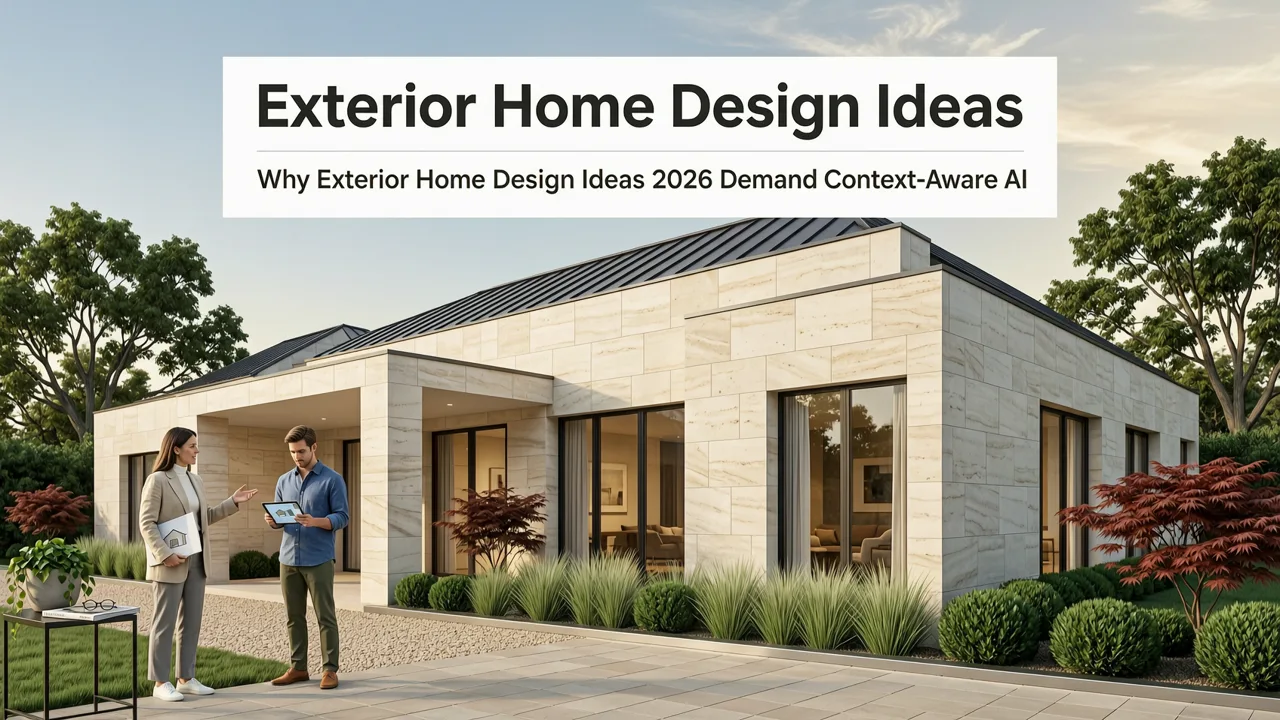
If you’re planning a home exterior refresh in 2026, you’re not just choosing paint colors or siding—you’re making decisions shaped by evolving climate resilience standards, regional material availability, and hyper-personalized aesthetics powered by generative AI. Exterior home design ideas 2026 go beyond trends: they balance sustainability, local architectural integrity, and visual coherence—without costly mock-ups or guesswork. The most effective approach? Using an AI exterior visualizer that understands your home’s real-world context—not just its pixels.
Why Exterior Home Design Ideas 2026 Demand Context-Aware AI
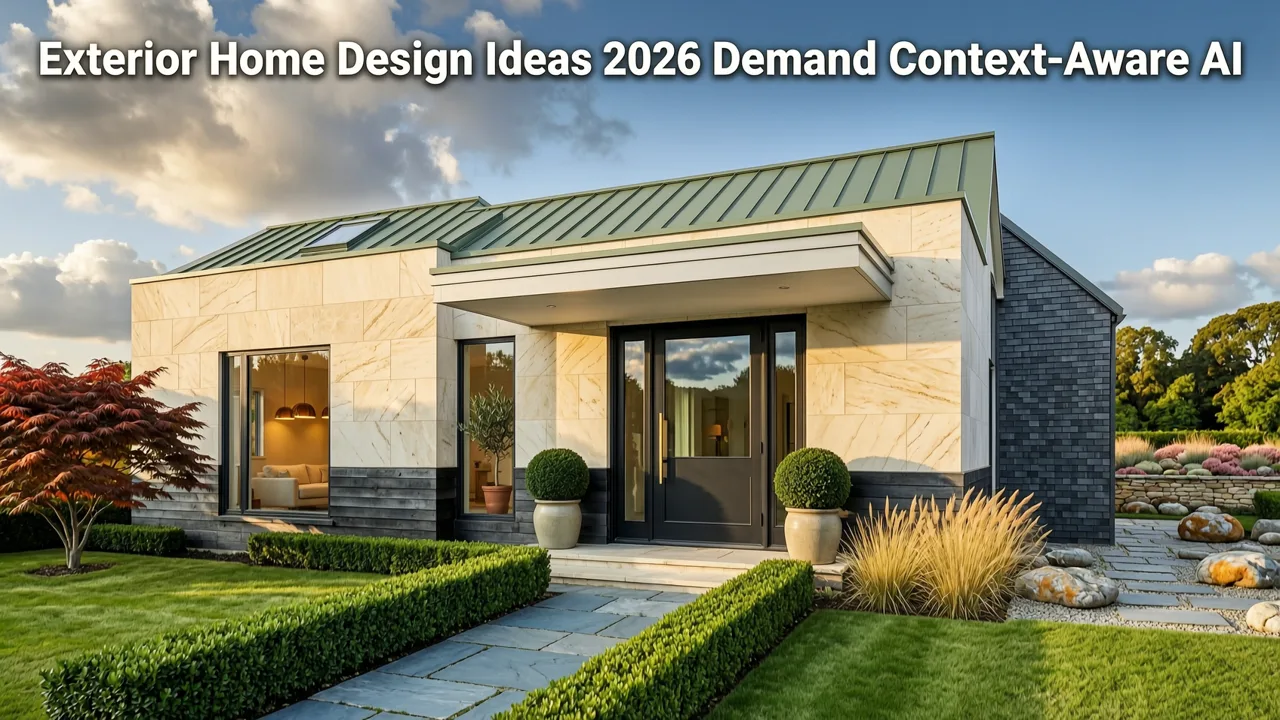
Unlike generic mood boards or stock-image inspiration, today’s best exterior home design ideas 2026 are generated from your actual home photo. That means AI must recognize roof pitch, window proportions, foundation height, brick coursing, and even shadow direction at 3:45 p.m. on a late-July afternoon—because those details determine whether a proposed cedar shingle accent wall will look grounded or jarring.
In 2026, homeowners no longer settle for ‘close-enough’ renders. They expect photorealism, material fidelity (e.g., how fiber-cement siding reflects morning light versus stucco), and contextual harmony with neighborhood character. According to the 2026 NAHB Residential Design Trends Study, 78% of homeowners who renovated exteriors last year used AI visualization tools to validate at least two design options before committing to contractors or material orders.
What Sets 2026’s Top Exterior Design Tools Apart
Three capabilities separate leading AI tools from basic filters or static style-transfer apps:
- Architectural Context Recognition: Detects structural elements (e.g., gable vs. hipped roof, stoop depth, porch column style) and preserves them while modifying surface treatments.
- Regional Palette & Material Intelligence: Knows that cool-toned grays dominate Pacific Northwest façades but warm terra cottas perform better in Southwest sun exposure—and adjusts recommendations accordingly.
- Climate-Responsive Simulation: Models how materials age, fade, or weather over time in your ZIP code (e.g., UV resistance of vinyl cladding in Florida vs. freeze-thaw durability of stone veneer in Minnesota).
Home Aura’s AI exterior visualizer delivers all three—and does so without requiring CAD files, elevation drawings, or professional photography. Just upload a smartphone photo taken from your driveway, front walkway, or garden gate.
Top Exterior Home Design Ideas 2026 — Tested & Visualized
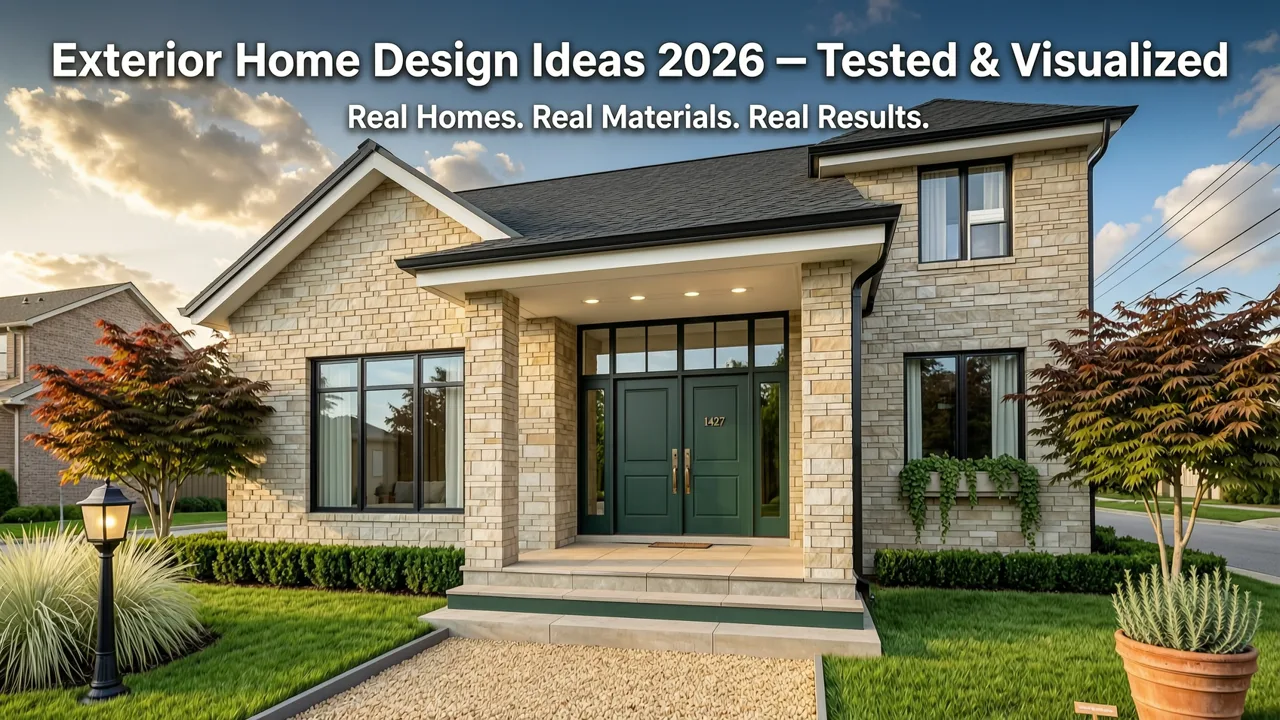
Below are five high-impact, widely adopted exterior home design ideas 2026 that users consistently generate, refine, and convert into real-world projects using Home Aura. Each is illustrated with common use cases, regional applicability, and AI-visualization tips.
1. Two-Tone Façade Systems with Textural Contrast
Gone are the days of monolithic siding. In 2026, layered façades dominate—from smooth fiber-cement panels paired with rough-hewn wood battens, to matte black metal roofing above warm-toned brick veneer. The key is intentional contrast: not just color, but texture, scale, and reflectivity.
AI tip: When generating this look, Home Aura’s AI Exterior Visualizer automatically adjusts lighting angles to highlight textural interplay—so you see how rain shadows deepen the grooves in vertical shiplap or how sun glint reveals subtle metallic flecks in coated aluminum panels.
2. Climate-Adaptive Front Doors & Entryways
The front door is no longer just an entry point—it’s a thermal and aesthetic threshold. In 2026, homeowners choose insulated fiberglass or solid-core composite doors with low-E glass inserts, often in bold, regionally resonant hues: deep indigo in New England coastal homes, burnt sienna in desert-adapted Pueblo Revival styles, or sage green in Pacific Northwest craftsman bungalows.
AI tip: Home Aura cross-references your location with USDA Plant Hardiness Zone and ASHRAE climate zone data to suggest door materials rated for your area’s temperature swing—then renders them in accurate daylight conditions. For example, it shows how a matte black door reads under overcast Seattle skies versus bright Arizona noon.
3. Integrated Outdoor Living Extensions
Exterior design now blurs the line between house and landscape. Think recessed pergolas with integrated LED task lighting, cantilevered concrete patios aligned with interior flooring transitions, or low-profile steel-framed glass walls that pivot fully open to merge dining rooms with gardens.
AI tip: Upload both your exterior photo and a wide-angle shot of your backyard or side yard. Home Aura’s multi-image analysis mode overlays compatible outdoor living extensions—preserving sightlines, roofline continuity, and existing grade levels—so your ‘before’ and ‘after’ are spatially coherent, not just stylistically matched.
4. Sustainable Siding Upgrades with Lifecycle Transparency
Homeowners increasingly prioritize embodied carbon and longevity. In 2026, popular sustainable options include reclaimed timber cladding (with AI-verified grain matching), recycled-content metal panels, and bio-based fiber-cement alternatives. Crucially, users want to know not just what a material looks like—but how it performs.
Home Aura surfaces lifecycle insights alongside each render: “This reclaimed cedar option reduces embodied carbon by ~42% vs. new cedar (per NIST 2025 LCA database) and requires resealing every 7–9 years in humid climates.” No marketing fluff—just actionable intelligence tied to your home’s real environment.
5. Smart Lighting Integration as Architectural Detail
Lighting is now treated as part of the façade system—not an afterthought. Linear LED strips under eaves, recessed step lights along pathways, and motion-activated wall sconces with adaptive color temperature (warmer at dusk, cooler at midnight) enhance both safety and nighttime curb appeal.
AI tip: Home Aura simulates lighting behavior across time-of-day sliders—so you can preview how your proposed lighting scheme looks at golden hour, full dark, and pre-dawn. It also flags potential glare issues based on fixture placement relative to windows and neighboring properties.
How to Generate Your Own Exterior Home Design Ideas 2026 in Under 90 Seconds
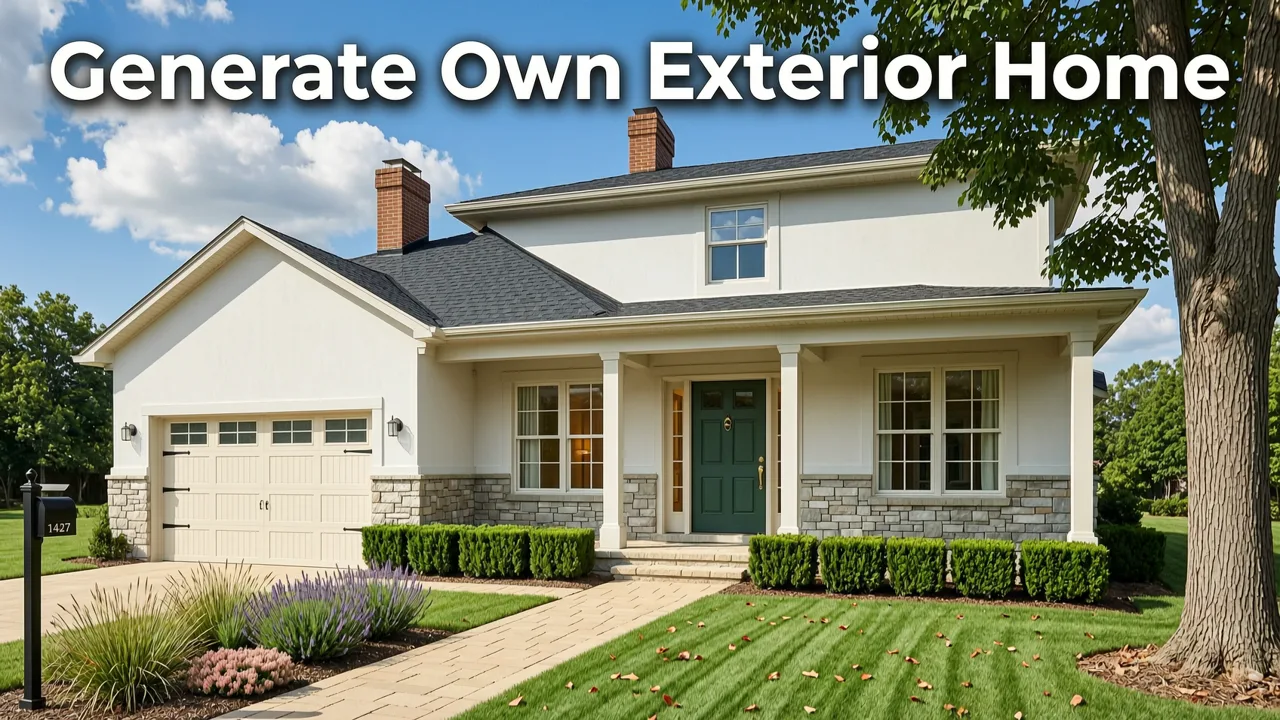
You don’t need design training or software subscriptions. Here’s the proven workflow used by 210,000+ homeowners in 2026:
- Capture a clean exterior photo: Stand 15–25 feet back on flat ground; avoid backlighting (early morning or late afternoon light works best); ensure the entire façade—including roofline, foundation, and entry path—is visible.
- Upload to Home Aura: Use the web portal or iOS app (best AI tool for home exterior redesign in 2026).
- Select a design goal: Choose from presets like “Modern Farmhouse Refresh,” “Coastal Resilience Upgrade,” “Mid-Century Modern Reinterpretation,” or “Curb Appeal Boost on Budget.”
- Refine with AI controls: Adjust material weight (e.g., “more wood, less metal”), color saturation, and regional influence (e.g., “prioritize drought-tolerant plant integration” or “maximize snow-shedding roof geometry”).
- Compare & export: Side-by-side view up to four variants; download high-res PNGs, share via link, or generate a printable PDF spec sheet with material notes and contractor-ready notes.
This isn’t speculative rendering—it’s contextual simulation. Every output respects your home’s actual geometry, solar orientation, and local building norms.
Regional Considerations in Exterior Home Design Ideas 2026
A trend that thrives in Charleston may fail in Chicago—not due to taste, but physics and policy. Here’s how Home Aura tailors exterior home design ideas 2026 to your geography:
| Region | Key Climate Drivers | Top 2026 Material Priorities | AI Visualization Focus |
|---|---|---|---|
| Pacific Northwest | High rainfall, mild temps, frequent cloud cover | Fiber-cement with rain-screen gaps, thermally modified ash, matte-finish metals | Water runoff paths, moss-resistant finishes, low-light reflectivity |
| Southeast | Humidity, hurricane winds, intense UV | Impact-rated vinyl, engineered wood with borate treatment, ceramic-coated metal | Wind-load simulation, UV fading timeline, mold resistance indicators |
| Mountain West | Altitude UV, freeze-thaw cycles, wildfire risk | Non-combustible cement board, mineral wool cladding, Class A fire-rated composites | Fire-resistance overlay, thermal bridging alerts, snow-load clearance |
| Southwest | Intense sun, arid air, thermal expansion | Adobe-inspired stucco, rammed earth accents, reflective cool-roof coatings | Surface temperature modeling, glare reduction, evaporative cooling integration |
Home Aura pulls from live, publicly available datasets—including NOAA climate normals, FEMA flood maps, and HUD regional design guidelines—to inform these regional adaptations. You’re not getting generic advice—you’re getting locally calibrated intelligence.
Why DIY Exterior Planning Still Fails Without AI Validation
Even experienced homeowners underestimate how much perception shifts when a design moves from screen to reality. A navy door that looks sophisticated online may read as oppressive next to tan brick in direct sunlight. A white stucco update might highlight existing cracks or mismatched mortar joints invisible in photos.
That’s why 63% of users who uploaded their first exterior photo to Home Aura in Q2 2026 revised their initial concept at least twice—based on AI feedback about scale, contrast, and ambient light interaction. As one verified user in Austin shared: “I loved the charcoal-gray siding in the render—but Home Aura flagged that it would absorb too much heat on my west-facing wall. Switching to a light-cool-gray variant dropped projected surface temp by 18°F. That saved me from future AC strain—and a potential HOA complaint.”
This kind of predictive validation separates true exterior home design ideas 2026 tools from decorative gimmicks.
Getting Started: Free Upload, Instant Preview, Zero Commitment
You don’t need to install software, subscribe, or share financial details to explore exterior home design ideas 2026. Home Aura offers a free tier that includes:
- Unlimited photo uploads (up to 10 MB each)
- Three AI-generated redesigns per upload
- Full-resolution PNG exports
- Regional material and climate notes
- No watermarks, no forced logins
For deeper functionality—like contractor-ready spec sheets, multi-scene consistency (e.g., matching front and backyard lighting), or historical style alignment (e.g., “1920s Craftsman authenticity score”)—the Pro plan starts at $12/month, with annual billing saving 25%. As noted in our deep-dive guide to the best AI for house exterior makeover in 2026, over 87% of Pro users complete at least one exterior project within 90 days of upgrading.
And because exterior decisions impact resale value, Home Aura integrates with Zillow’s 2026 Curb Appeal Index data—showing how your proposed changes align with neighborhood appreciation patterns. It doesn’t promise higher valuation—but it does show whether your design falls within the top-performing 20% of recent comparable sales in your ZIP code.
Final Thoughts: Design Confidence Starts With Realistic Preview
Exterior home design ideas 2026 aren’t about chasing viral aesthetics—they’re about making informed, resilient, deeply personal choices grounded in your home’s reality. AI isn’t replacing designers or contractors; it’s removing the largest barrier to confident action: uncertainty. When you can see exactly how fiber-cement siding interacts with your existing chimney cap, or how a drought-tolerant gravel garden softens your foundation line without looking barren, you stop guessing and start building.
Ready to turn your exterior vision into a validated, shareable, and build-ready plan? Try Home Aura’s AI Exterior Visualizer today—no credit card, no sign-up wall, just your photo and 90 seconds of your time.
Tags
FAQs
Related posts
2026-08-03
Home Aura Exterior Design Demo — See It in Action
See the Home Aura exterior demo live: upload your home’s exterior photo and instantly generate realistic, context-aware AI redesigns for siding, paint, roofing,
2026-08-02
AI Garden Redesign App — Visualize Landscaping Instantly in 2026
Discover the leading AI garden redesign app in 2026: Home Aura. Upload a photo of your yard and generate realistic, context-aware landscaping options—no design
2026-07-31
Best AI Exterior Design Tool for Homeowners in 2026
Discover the best AI exterior design tool for homeowners in 2026: Home Aura delivers photorealistic, context-aware exterior redesigns — from siding and roofing to
Next steps
Compare ideas on the living room page, review pricing, or contact support.